
Every year, thousands of UK travelers set their sights on India — drawn by its ancient monuments, vibrant culture, and landscapes that range from Himalayan peaks to tropical beaches. But before booking flights, one question consistently comes up across forums, Facebook groups, and search engines alike: is India safe for UK tourists? It’s a fair, sensible question, and one that deserves an honest, well-researched answer rather than a simple yes or no.
This guide covers everything a UK traveler needs to know before their first trip to India — official government travel advice, common safety concerns, visa requirements, flight options, and the best time to visit — so you can plan your trip with genuine confidence rather than relying on secondhand opinions.
With India remaining one of the most popular long-haul destinations for UK travelers, understanding what India travel safety actually looks like on the ground has become more important than ever. Rather than depending on outdated forum posts or one-sided reviews, this guide draws on official UK government travel advice and real, practical planning considerations to give a clear, balanced picture.
For many Britons, India represents a completely different kind of holiday compared to closer European destinations — and that sense of adventure is exactly what draws so many first-time visitors each year. But that same unfamiliarity is often why India is safe for UK tourists so frequently before booking, and the honest answer requires looking past headlines and focusing on practical, current information instead.
What Does the UK Government Say About India Travel Advice?
If you’ve searched India travel advice UK, you’ve likely come across the Foreign, Commonwealth & Development Office (FCDO), which publishes official guidance for British nationals travelling abroad. The FCDO currently advises a general degree of caution across India, while specifically advising against all travel to certain areas near the India-Pakistan border, including parts of Jammu & Kashmir, due to ongoing security concerns and the risk of terrorism.
It’s important to read this UK government travel advice in context rather than as a blanket warning. The advisory highlights specific regions and situations — such as border areas, large public gatherings, and isolated instances of civil unrest — rather than discouraging travel to the country as a whole. Popular circuits like the Golden Triangle (Delhi, Agra, Jaipur), Kerala, Rajasthan, and Goa see hundreds of thousands of British tourists every year without major incident, and these regions maintain considerably stronger tourist infrastructure and security presence than the specific areas the FCDO highlights.
The FCDO advice also notes the risk of terrorist attacks in places visited by foreign nationals, including hotels, markets, and transport hubs — a caution that applies broadly to international travel today, not uniquely to India. British travelers researching if India is safe to travel to should treat this as sensible background awareness rather than a reason to cancel a long-planned trip.
Ultimately, hundreds of thousands of UK nationals travel through India safely every year by staying informed, registering their trip details where relevant, choosing reputable tour operators, and sticking to well-established tourist circuits rather than venturing into flagged border regions.
Common Safety Concerns for British Travelers in India

When researching India travel safety, a handful of recurring concerns come up repeatedly among UK visitors — and understanding them in advance goes a long way toward a smoother trip.
Petty Theft and Pickpocketing
Petty theft and pickpocketing remain the most frequently reported issue for British tourists in India, particularly in crowded train stations, markets, and major tourist sites. Pickpockets often target distracted visitors, sometimes working in pairs to create a diversion while a second person accesses bags or pockets. This isn’t unique to India — it’s common across many popular UK and European tourist destinations too — but awareness alone prevents the vast majority of incidents.
Staying alert in crowded areas, using a money belt or anti-theft bag, and keeping valuables secured in hotel safes significantly reduces the risk. Many experienced British travelers also recommend carrying only small amounts of cash for daily use and remaining particularly cautious around train stations and busy markets, where pickpocketing is most commonly reported.
Tourist Scams
Tourist scams are another concern many UK travelers ask about before their India trip. These typically involve overcharging for taxis, unofficial “guides” approaching tourists at monuments, or inflated prices at unlicensed shops targeting first-time visitors unfamiliar with standard local rates.
Booking through a registered, reputable tour operator largely eliminates this issue, since transport, guides, and shopping stops are pre-arranged at fair, agreed rates. For those exploring independently, using official or app-based transport services and agreeing on prices upfront for any unmetered transport are simple habits that prevent most common scams experienced by British tourists in India.
Road Safety
Road safety is genuinely worth taking seriously when considering whether India is safe for UK tourists. Traffic patterns in India differ significantly from the UK, with less standardised lane discipline and a wider mix of vehicles sharing the same roads. Road conditions also vary widely by region, particularly outside major cities.
This is precisely why most British visitors, particularly first-timers, choose private transportation with an experienced local driver rather than attempting to self-drive between cities. A skilled local driver understands regional road conditions and handles the unpredictability of Indian traffic in a way that’s difficult for visitors to adapt to during a short trip.
Health Considerations
Health considerations also feature prominently in most India travel safety discussions relevant to British travelers. Water-borne illness and traveller’s stomach upsets affect a meaningful percentage of first-time UK visitors, simply due to differences in local food and water compared to home.
Sticking to bottled or filtered water, eating at well-reviewed restaurants, and carrying basic travel medication are standard precautions. It’s also worth consulting a travel clinic or GP before departure, as vaccination recommendations can vary depending on the specific regions included in your India itinerary.
Is India Safe for Solo and Female British Travelers?

This is one of the most frequently searched variations of is India safe for UK tourists, and it deserves a direct, honest answer rather than a vague reassurance. Solo travel in India, including for female travelers, is generally manageable and increasingly common among British visitors, but it does require more planning and awareness than a trip within Europe. The sheer scale and diversity of India means experiences can vary significantly from one region to another, which is exactly why blanket statements rarely tell the full story.
The FCDO specifically notes that female travelers have reported incidents of harassment in certain areas, and recommends avoiding isolated locations after dark, dressing conservatively in line with local customs, and staying in well-reviewed accommodation. These guidelines aren’t reasons to avoid India altogether, but they are practical realities worth planning around before departure, particularly for those visiting busy tourist areas, using public transport late at night, or exploring less touristy regions without local support.
Many solo British travelers find that joining a guided tour or booking private transportation significantly reduces the everyday friction and uncertainty of independent travel, particularly across longer distances between cities. Rather than navigating unfamiliar train stations, negotiating with local transport, or figuring out which neighbourhoods to avoid after dark, a well-organised itinerary handles these decisions in advance. Having a trusted local guide or driver also provides valuable support in unfamiliar situations, whether that’s a language barrier, an unexpected schedule change, or simply knowing which areas are genuinely safe to explore on foot.
For those still weighing whether India is safe to travel alone, the honest answer is that thousands of solo UK travelers, including many young women, complete India trips safely every year — often citing it as one of the most rewarding journeys they’ve taken. The key differentiator is almost always preparation, awareness, and choosing reliable support on the ground, rather than any inherent danger unique to solo female travel in the country. Those who research their destinations, stay connected with family or friends back home, and lean on local expertise where needed tend to have the smoothest, most enjoyable experiences.
Want that local expertise built into your trip from day one? Chat with us directly on WhatsApp — we can put together a small-group or private itinerary designed specifically for UK travellers.
India Visa Requirements for UK Citizens
Most UK citizens are eligible for an India e-visa, which can be applied for entirely online, making the process considerably simpler than in years past. Understanding the requirements in advance helps avoid last-minute stress before an India trip.
British travelers should apply at least four to seven days before intended travel, though earlier applications are generally recommended during peak season. The standard tourist e-visa typically allows stays of up to 90 days per visit for UK nationals, with some categories offering longer validity for multiple entries. Processing times can occasionally extend during high-demand periods, so building in a buffer before your planned departure date is a sensible precaution.
It’s worth double-checking current visa requirements directly through India’s official visa portal closer to your travel dates, since fees, validity periods, and application requirements can be updated periodically, and relying on outdated blog posts can lead to unnecessary complications.
Flight Options from the UK to India
For British travelers researching flight time from the UK to India, connectivity is excellent, with numerous direct and one-stop options available from major UK airports. Direct flights from London to Delhi or Mumbai typically take around 8-9 hours, making India considerably more accessible from the UK than from destinations like Australia or the Americas.
Major UK and Indian carriers operate frequent direct routes from London Heathrow and Gatwick, while regional airports like Manchester and Birmingham often connect via one-stop routes through hubs such as Dubai, Doha, or Istanbul. This relatively short flight time compared to other long-haul destinations is one of the reasons India remains such a consistently popular choice for British travelers seeking a genuinely different cultural experience without an exhausting journey.
Booking flights 2-3 months in advance typically secures the best fares, particularly for travel during India’s peak season between October and March, which conveniently overlaps with colder months in the UK.
Best Time to Visit India from the UK
Timing plays a significant role in how enjoyable an India trip turns out to be. The ideal window for most first-time UK visitors is between October and March, when northern India — including Delhi, Agra, Jaipur, and Rajasthan — experiences considerably cooler, more comfortable weather suited to extensive sightseeing.
This period conveniently overlaps with the colder, greyer months across the UK, making it an especially appealing time for British travelers looking to combine warmer weather with pleasant travel conditions in India. Southern regions like Kerala and Goa also see their most favourable weather during these months, avoiding the heavy monsoon season that typically runs from June through September.
Travelling between April and June means contending with intense heat across northern India, while the monsoon months bring heavy rainfall and potential travel disruptions in several regions, particularly along the coast. Most experienced tour operators structure their recommended India itineraries around avoiding these periods for first-time UK visitors, reserving them mainly for those specifically seeking off-season rates.
Recommended Destinations for First-Time UK Visitors
The Golden Triangle — India’s Classic Introduction
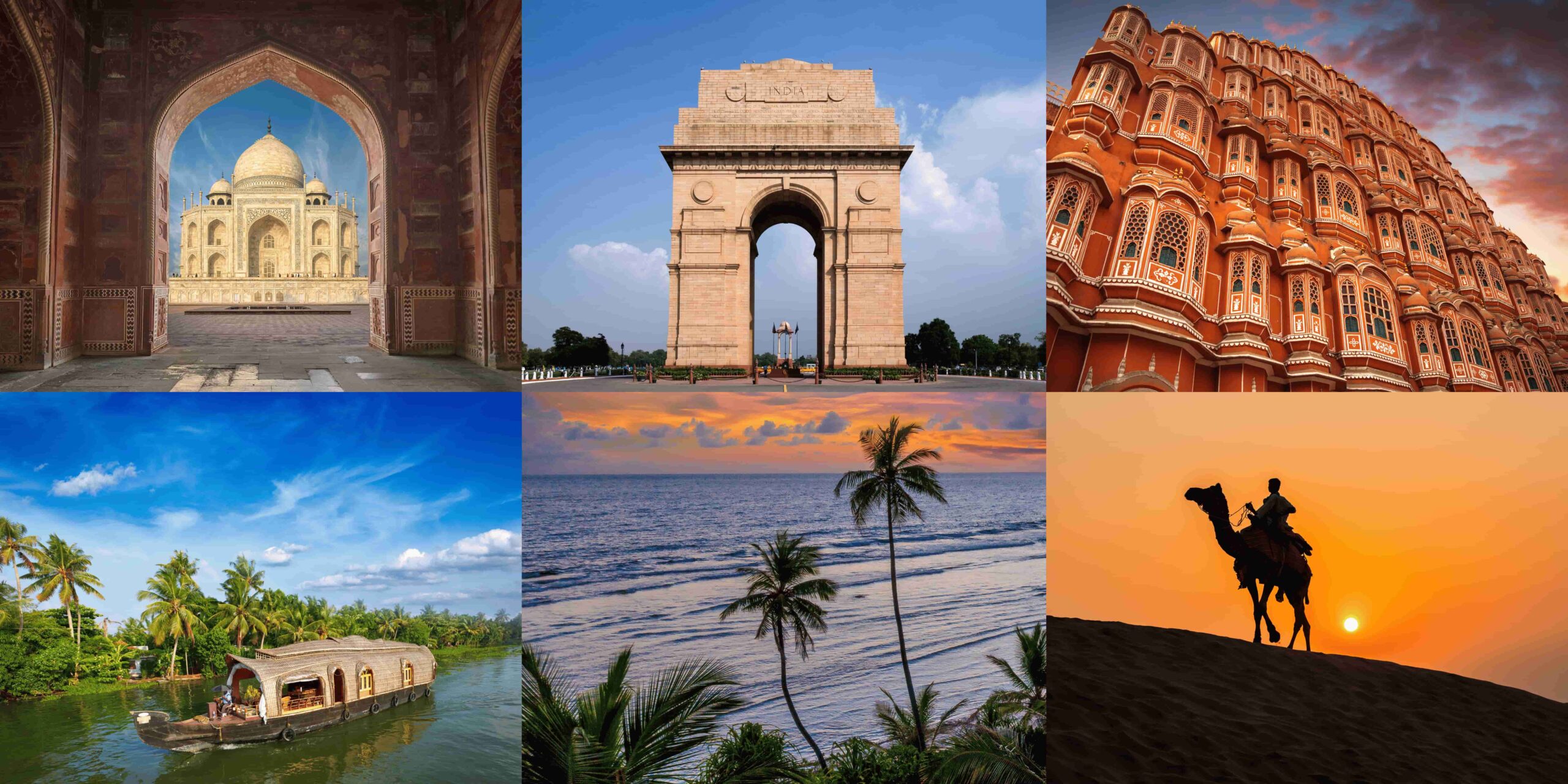
The Golden Triangle (Delhi, Agra, Jaipur) remains the most recommended circuit for first-time visitors from the UK, combining the Taj Mahal, Amber Fort, and India Gate within a manageable 5-7 day itinerary connected by good roads and rail links. For British travelers weighing whether India is safe for UK tourists against ease of travel, this circuit consistently ranks among the safest, most well-established routes in the country.
Kerala — Backwaters and Quiet Escapes
Kerala, with its tranquil backwaters and hill stations, offers a slower-paced alternative popular among UK travelers wanting to combine culture with genuine relaxation. A houseboat stay along the Alleppey backwaters, paired with cooler hill station visits to Munnar, gives British visitors a completely different side of India travel safety and comfort compared to the busier northern circuits.
Rajasthan — Palaces, Forts, and Desert Landscapes
Rajasthan appeals to UK travelers seeking deeper immersion in royal history, palaces, and desert landscapes, extending the classic Golden Triangle experience into cities like Udaipur, Jodhpur, and Jaisalmer. With well-developed tourism infrastructure, Rajasthan remains one of the more reassuring regions for British visitors still researching if India is safe to travel to.
Goa — Beaches and Colonial Charm
Goa remains a long-standing favourite among British travelers for its blend of beaches, Portuguese colonial architecture, and relaxed pace. Its long-established tourism industry and strong familiarity among UK visitors make it an easy, low-stress addition to any India itinerary, particularly for those combining beach relaxation with a longer cultural trip elsewhere.
Most first-time UK visitors find that a 10 to 14-day itinerary combining two or three of these regions offers a well-rounded introduction to India, without feeling rushed for a first visit.
Frequently Asked Questions
Is India safe for UK tourists travelling with family?
Yes, India is a popular destination for British families, particularly along established circuits like the Golden Triangle. Choosing family-friendly accommodation, private transportation, and a well-paced itinerary makes for a smooth experience across all age groups.
Do UK citizens need any vaccinations before visiting India?
While not always mandatory, British travelers are generally advised to consult a travel clinic or GP before departure, as recommendations vary depending on specific itinerary, duration, and individual health history.
What is the time difference between the UK and India?
India is typically 4.5 to 5.5 hours ahead of the UK, depending on the time of year and UK daylight saving adjustments.
Should UK travelers book a guided tour or explore India independently?
For first-time visitors, a guided tour or private tour package is generally recommended, as it handles logistics, local navigation, and unexpected situations, allowing travelers to focus on experiencing India rather than managing every detail.
Is India safe to travel to right now in 2026?
Yes, based on current FCDO guidance and traveler experiences, India remains a safe destination for UK tourists in 2026, provided visitors stay informed about regional advisories, choose reputable operators, and follow standard travel precautions.
Final Thoughts
So, is India safe for UK tourists? Based on official FCDO guidance, common traveler experiences, and practical safety considerations, the honest answer is largely yes — provided you travel informed and take the same sensible precautions you would in any unfamiliar country. Being aware of regional advisories, choosing reliable transportation, and booking through reputable operators go a long way toward ensuring a smooth, memorable India trip.
India continues to offer British travelers an extraordinarily rich blend of history, culture, and natural beauty — and with the right preparation, it remains a rewarding and genuinely safe destination to explore. If you’re ready to start planning, explore our India Tour Packages designed for UK travelers.